
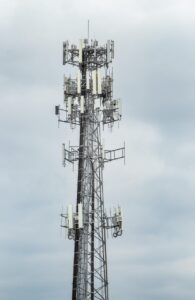
Cell towers work by using radio frequency (RF) signals to communicate with mobile phones within a defined geographic area called a “cell”. Antennas on the tower receive signals from phones and send them through fiber optic cables to the carrier’s network infrastructure, where data is processed and routed to its destination. For incoming calls, the process is reversed: data travels from the network to the tower and is then transmitted as an RF signal to your phone.
Here’s a breakdown of how the process works:
-
1. Device to Tower (Uploading Data):When you make a call, send a text, or access the internet, your phone sends an RF signal to the nearest cell tower.
-
2. Tower to Network (Backhaul):The cell tower’s antennas capture these signals. This data is sent via a high-capacity data link, called a backhaul connection, to the carrier’s network infrastructure.
-
3. Network Processing:The network infrastructure, including mobile switching centers (MSCs) and aggregation points, processes the data and determines the most efficient path to the intended recipient.
-
4. Tower to Device (Downloading Data):For incoming calls or data, the process is reversed. The network sends the data to the appropriate cell tower, which then transmits the signal to your phone.
-
5. Hand-offs:As you move between cells, your phone will be seamlessly transferred from one tower to another by the network, a process called a handoff, to maintain your connection.
Key components of a cell tower include:
-
Tower/Mast:The physical structure that holds the antennas at a strategic height to maximize coverage.
-
Antennas:These are the primary pieces of equipment that transmit and receive the RF signals to and from mobile devices.
-
Base Transceiver Station (BTS):Housed at the base of the tower, this equipment contains transceivers, amplifiers, and other tools to manage the radio signals and process communications.
-
Backhaul Connection:High-capacity fiber optic cables connect the cell tower to the wider network, providing the necessary infrastructure for data transfer.
-
Backup Power:Generators are often included to ensure the tower remains operational during power outages.